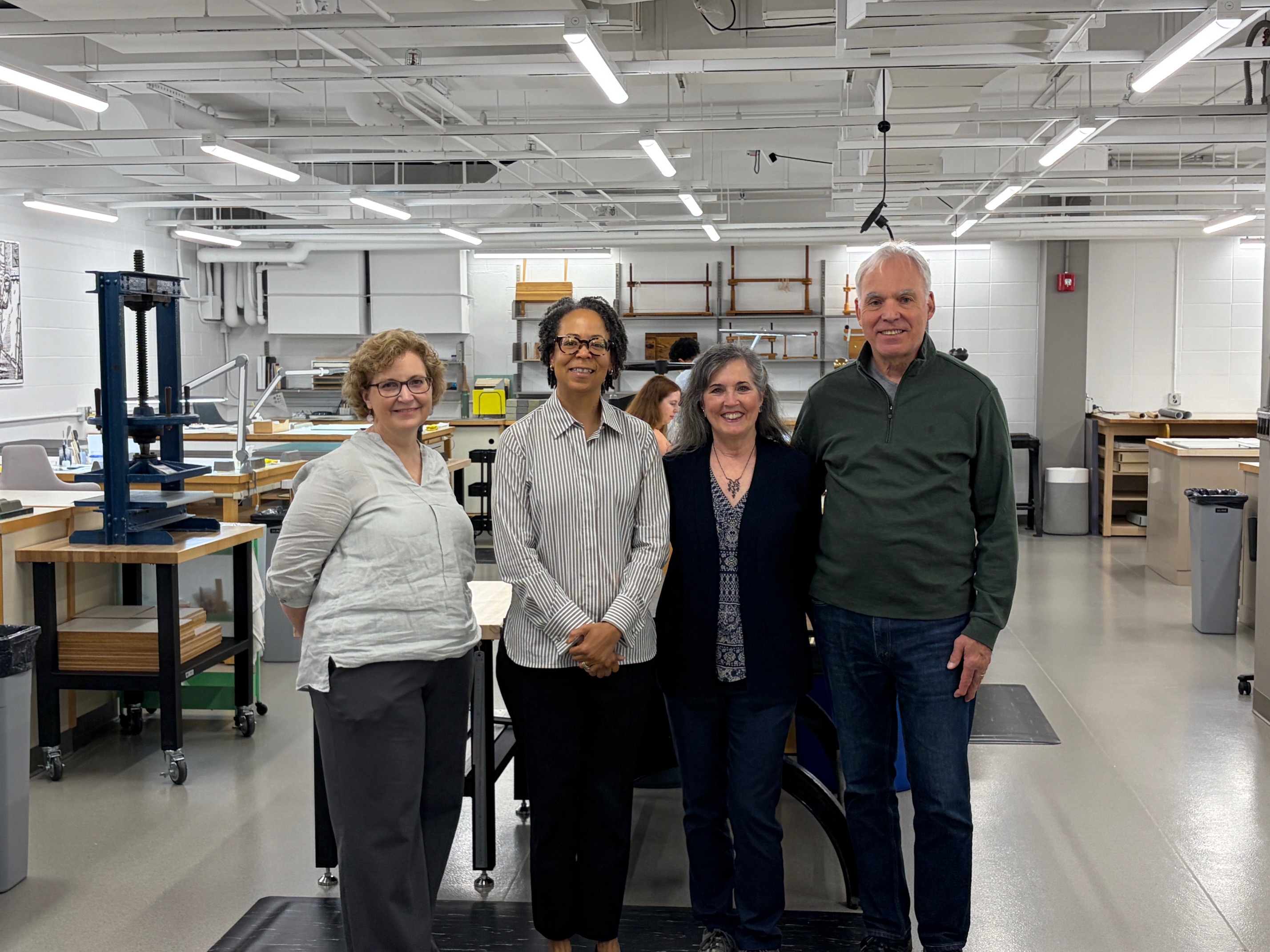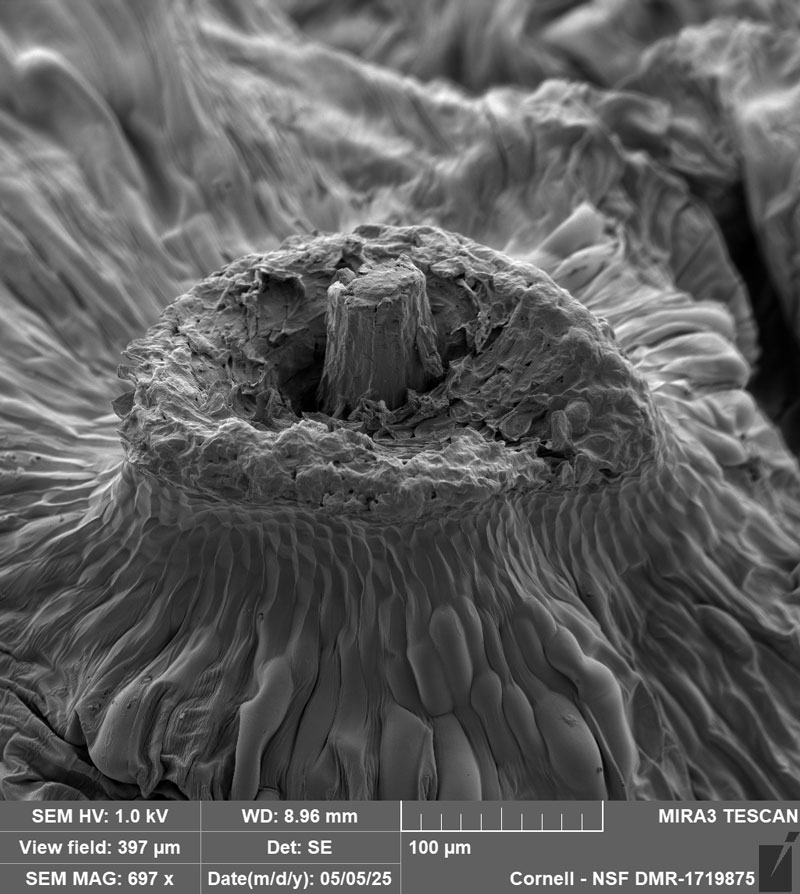
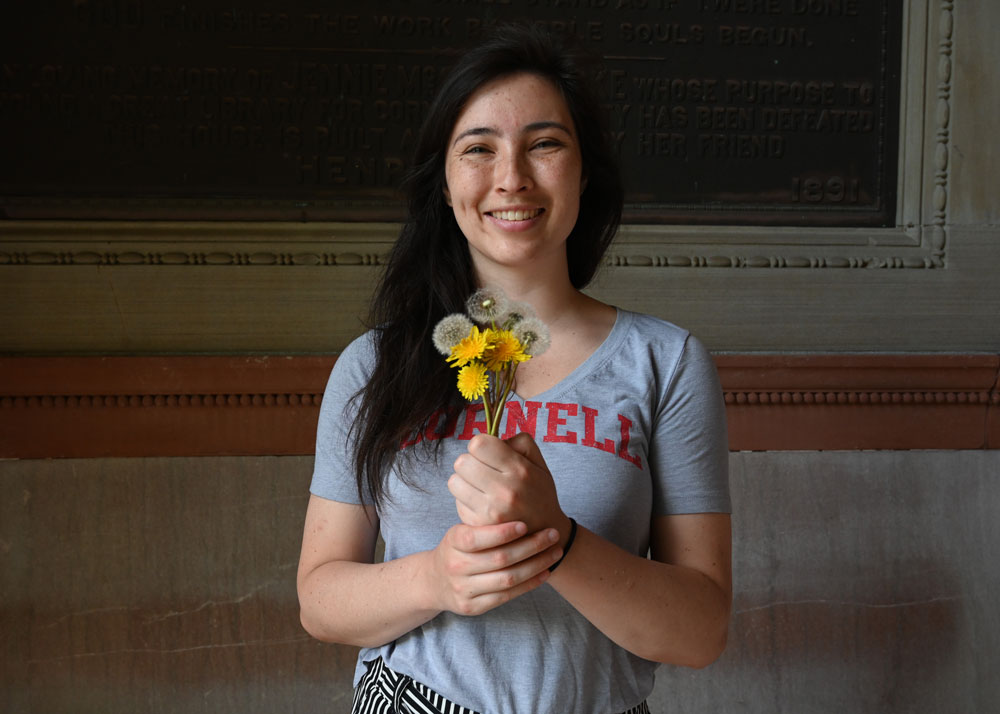
When Cornell Ph.D. student Jena Shields needed an online repository to hold the data for a scientific paper she co-authored with her advisor and other peers on how dandelion seeds break off and scatter, she turned to Cornell University Library’s eCommons platform. Throughout the process of uploading, error-testing, and formatting her data sets, Shields was assisted by Lencia McKee, a member of Cornell University Library’s Research Data and Open Scholarship (RDOS) team.
“Lencia helped a lot with making sure that the data was actually useful to anyone else who looked at it, that my codes were good, and all my data was archived in a way that was actually good for long-term storage,” Shields said.
The paper was titled “Letting Go with the Flow: Directional Abscission of Dandelion Seeds,” published by the Journal of the Royal Society Interface.
“A lot of the journal articles now require us to upload and curate data that supports the findings that we’re presenting through the paper,” said Shields’s advisor and co-author Chris Roh ’12, who is an assistant professor of biological and environmental engineering in the College of Agriculture and Life Sciences.
“There are many ways to do it, but as a curator of information, we thought the library was the best place to start, and it was very helpful to upload the data and create a repository for the data through the help of the library,” he said.
Their paper contributes to knowledge about how seeds scatter in response to wind and other weather events, with ramifications for understanding how crops propagate as climates change.
“People might not care too much about how dandelion spreads because they’re considered weeds, but there are other crops, like lettuce, that have the same seed structure,” Shields said. “We can do better modeling to understand how seeds will distribute differently in different weather conditions.”
How to get help with data from the library
Experts across Cornell University Library are ready to support your research data needs—from organizing and sharing your data and code to working with geospatial information; from publishing Open Access articles and data sets on eCommons to dealing with topics related to business and entrepreneurship.
For general data inquiries, reach out to the library through Ask a Librarian, or by contacting your unit library. You can also find more info about the library’s Research Data and Open Scholarship department at their webpage.